Apicoectomy & Root-End Surgery in Dubai
Apicoectomy is surgery at the tip of a tooth root. It may be considered when disease persists around a root-treated tooth that can still be restored.
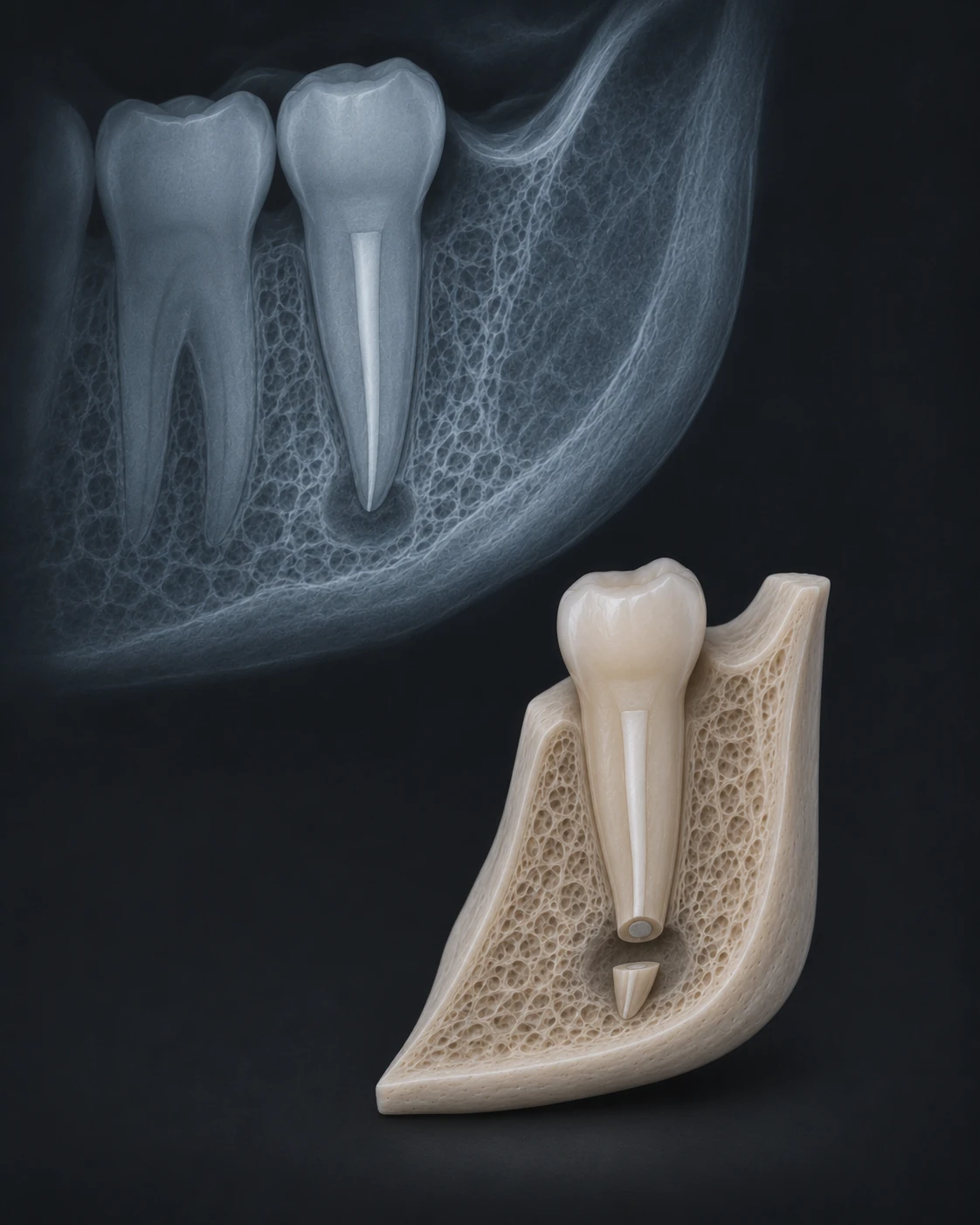
Why might a root-treated tooth still have a problem?
Persistent symptoms or a change on an X-ray can have several explanations, including unresolved infection, a fracture or another tooth. We examine the tooth, the crown and the surrounding gums and bone. An X-ray finding is interpreted alongside symptoms and the history of the previous root canal treatment.
Retreatment, surgery or extraction?
Retreatment through the crown may be appropriate if the cause can be corrected from inside the tooth. Root-end surgery may be considered where that approach is unsuitable or a persistent lesion requires access. A vertical fracture or a tooth that cannot be restored can change the decision toward extraction.
What happens during an apicoectomy?
The surgeon accesses the root tip through the gum, removes inflamed tissue and treats and seals the root end as appropriate. Tissue may be sent for pathology when indicated. Follow-up checks gum healing early and bone healing on later images.
What should I ask at consultation?
Bring previous root canal records and images. Ask why the tooth is considered restorable, what the expected benefit is, and how we will check the outcome. The location of the root and nearby structures may affect access and risk.
Common questions
Is this another root canal?
Both aim to address disease linked to the root, but root-end surgery approaches the tip through the gum.
Will it always save the tooth?
No. The outlook depends on the cause, root integrity, remaining support and whether the tooth can be restored.
See the full range of services in Oral Surgery in Dubai.
Patient information sources