Wisdom Teeth Removal in Dubai
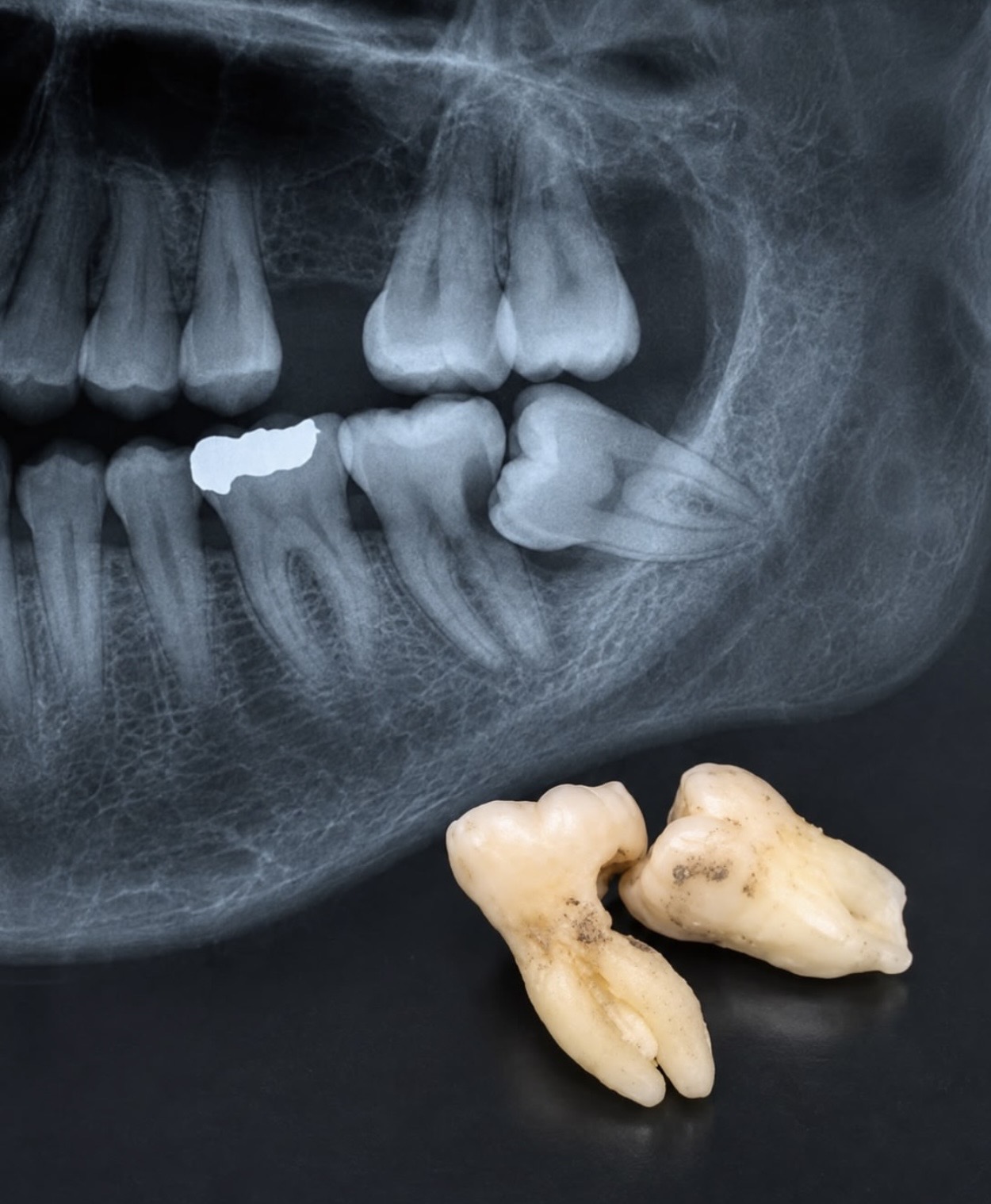
An impacted wisdom tooth may cause pain, swelling around the gum or damage to the tooth in front. An assessment helps decide whether removal, monitoring or another option is appropriate.
When is removal considered?
Repeated infection around a partly erupted tooth, decay that cannot be restored, damage to the adjacent tooth or a cyst can change the plan. An impacted tooth that is healthy and symptom-free may be monitored. Cheek or jaw pain alone does not identify which tooth is responsible.
What does the X-ray help us decide?
We look at the position of the tooth, the adjacent molar and the roots. For a lower tooth, the relationship to the nerve supplying the lower lip and chin can matter. A 3D scan may help when a conventional image leaves an important question and the result could change treatment.
What are the options if the tooth is close to the nerve?
In selected lower wisdom teeth, coronectomy may reduce the risk of nerve injury by leaving the roots in place. It has its own risks and is unsuitable for some teeth. Discuss the benefit of removing the tooth, the risks of nerve symptoms and the follow-up required for each option.
How do I plan recovery?
Arrange time for swelling and a less demanding diet, especially after more complex surgery. Ask what anaesthesia is planned and whether you need transport. Read the extraction recovery guide and know how to reach the team if discomfort worsens instead of improving.
Common questions
Is a partially erupted tooth always infected?
No. Tender or swollen gum, difficulty opening and a bad taste can occur with inflammation or infection. An examination checks the source and how far it has spread.
What changes the cost?
Complexity, number of teeth, imaging and anaesthesia can affect a quote. See what an extraction estimate should include.
See the full range of services in Oral Surgery in Dubai.
Patient information sources